


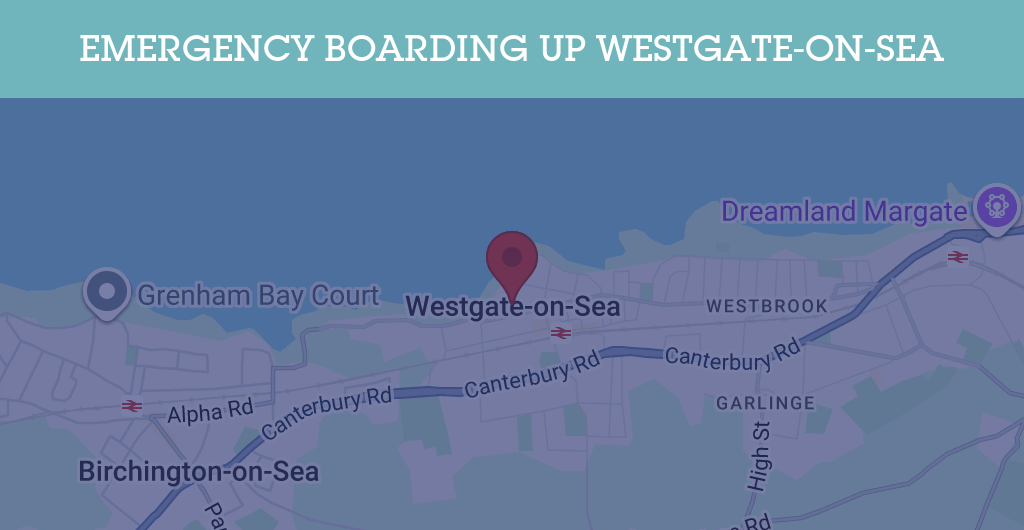
Boarding Up Westgate-on-Sea (CT8) – Emergency & Planned Property Security
If you’re dealing with a smashed window, a forced door, or an exposed shopfront in Westgate-on-Sea (CT8), the priority is simple: secure the property quickly and safely so you can stop further damage, prevent unwanted access, and keep neighbours and passers-by safe.
Boarding Up Canterbury provides 24/7 boarding up across CT8, including out of hours call-outs when you need to make safe after a break-in, vandalism, storm damage, or an accident. We won’t promise a fixed arrival time because jobs and road conditions vary, but we prioritise urgent calls and give you a realistic ETA on the phone.
You’ll deal with a team that’s been trading for 10+ years, is fully insured, and uses DBS-checked technicians—important when we’re working at homes, empty properties, or commercial premises late at night.
Need help now? Call 01227 953 460
Westgate-on-Sea (CT8): why boarding up matters here
Westgate-on-Sea is a coastal town, and that changes the risk profile compared with inland areas. In CT8, we regularly see damage and security issues linked to weather exposure, seasonal footfall, and the mix of property types.
Common local triggers we’re called for in CT8
- Smashed window incidents after an argument, vandalism, or an attempted break-in—especially where ground-floor glazing is accessible from the pavement.
- Door damage following forced entry, where the frame has split or the lock area has been kicked in.
- Storm-related breakages (wind-driven debris, dislodged panels, loosened rooflights), where the goal is as much weatherproofing as security.
- Shopfront problems along the busier parts of town—one cracked pane can quickly become a full break if it flexes in the wind or gets knocked again.
Property types in Westgate-on-Sea that can be vulnerable
- Seafront and near-seafront homes/lets: large windows and exposed elevations can suffer in heavy weather. Once glass is gone, the inside can deteriorate rapidly from damp and drafts.
- Traditional terraces and older flats: timber frames and older door sets can be more prone to splitting when forced, which affects how we fix boards without making the damage worse.
- Small commercial units and cafés: wide glazed panels often require larger sheets and a fixing plan that doesn’t create trip hazards for the public.
Local factors that affect “making safe” in CT8
- Coastal wind and salt air: even a temporary opening can let in driving rain. We aim to close the building envelope properly, not just “cover the hole”.
- Public-facing locations (near shops, bus stops, and pedestrian routes): boarding must be robust and tidy—strong fixings, no sharp edges, and minimal protrusions.
- Access and neighbours: many properties have limited side access or shared entrances. We plan fixings and sheet sizes so we can work efficiently without blocking access more than necessary.
When you call, tell us what’s happened and whether the building is occupied, empty, or a business. That helps us arrive with the right materials for temporary boarding and the safest fixing method.
A typical Westgate-on-Sea call-out (CT8): what it can look like
A typical call-out in Westgate-on-Sea might involve a ground-floor flat where a rear window has been broken during an attempted entry. The resident may have taped up shards but can’t safely secure the opening, and the weather is turning.
On arrival, we’d usually:
-
Assess the opening and surrounding frame
- Check for loose glass, frame distortion, and whether the sill or reveals are sound enough to take fixings.
- If the frame is too damaged for a non-destructive method, we’ll explain options before proceeding.
-
Make the area safe first
- Clear immediate hazards (loose shards, unstable sections).
- Establish a safe working zone—especially important if the window faces a shared path or communal garden.
-
Select the right board and fixing approach
- For most window openings, we’ll typically use 18mm exterior-grade plywood for strength and better weather resistance.
- 12mm OSB may be suitable for smaller, low-risk openings where a lighter sheet is practical.
- Fixings are chosen to reduce tampering from outside—anti-tamper fixings are important if the property will be unattended.
-
Fit, seal and check security
- Boards are cut to suit the opening, fixed securely, and checked for movement.
- Where appropriate, we’ll reduce gaps to limit wind-driven rain getting inside.
-
Provide documentation
- You can expect time-stamped photos, a clear description of what’s been secured, and an itemised invoice—useful if you’re making an insurance claim.
The goal is simple: secure the property properly so you can sleep, travel, or continue trading without worrying that the opening will fail overnight.
What to do right now in an emergency in Westgate-on-Sea (CT8)
If you’ve got a smashed window or a damaged door, these steps help you stay safe and protect your claim.
-
If a crime is in progress or you feel unsafe, call 999
- Don’t confront anyone. Get to a safe place first.
-
If it’s after a break-in or attempted break-in, report it
- Ask for a crime reference number. Insurers often request it.
-
Take photos (only if safe) before anything is moved
- Wide shots showing location, then close-ups of the damage.
- If it’s a shopfront, photograph any impact point and the surrounding pavement area (helps show public risk).
-
Do not clear all glass if it risks injury
- Keep people away from the area. If you must move shards, use thick gloves and shoes—never bare hands.
-
Protect what you can without creating hazards
- Close internal doors to limit drafts and rain spread.
- If you’re using a temporary cover (like plastic), keep it inside the room so it doesn’t act like a sail in coastal wind.
-
Call for emergency boarding up
- We’ll ask a few practical questions: the type of opening (window/door/shopfront), approximate size, floor level, whether access is straightforward, and whether the property is occupied.
- If you’re out of hours, tell us if anyone is inside and whether there are children, vulnerable occupants, or immediate security risks.
-
Contact your insurer
- We’re not loss adjusters, but we can provide the sort of documentation insurers typically need: photos, work description, and invoice.
If you need to board up a broken window, board up a door, or get a shopfront boarded up in CT8, the key is getting the building secured properly so you’re not facing repeat entry or worsening weather damage.
Our local coverage around Westgate-on-Sea
We cover Westgate-on-Sea (CT8) and the surrounding Thanet area as part of our wider CT coverage. If you’re on the edge of Westgate-on-Sea or close to neighbouring towns, we can still help—call and we’ll confirm over the phone.
Nearby areas we also cover include:
Westgate-on-Sea boarding up FAQs (CT8)
Do you cover all of CT8 for boarding up?
Yes—if you’re in CT8, we can attend to secure property after damage. When you call, we’ll ask where the opening is (front, rear, upper floor, communal area) so we can plan access and materials.
Can you board up a smashed window near the seafront without it rattling loose in wind?
Coastal wind is a real factor in Westgate-on-Sea. We use appropriate board thickness and secure fixings to minimise movement. The aim isn’t just to cover the hole—it’s to keep the opening stable and reduce water ingress until glazing repairs are arranged.
What if the window frame or door frame is too damaged to fix boards to?
If the surrounding structure is too weak, we’ll explain what’s viable before proceeding. Sometimes a different fixing approach is needed to avoid making the damage worse, especially with older timber frames.
I’m a tenant in CT8—should I call you or the landlord first?
If there’s an immediate security risk (open doorway, broken ground-floor window), it’s reasonable to act quickly to make safe. If you can, notify your landlord/agent right away and keep any reference numbers, photos, and invoices for the record.
Can you help if the damage is in a communal entrance or shared hallway?
Yes. Communal areas need careful handling because people still need access and there are fire-safety considerations. Tell us it’s a shared entrance when you call so we can arrive prepared and keep disruption as low as possible.
Will boarding up affect my insurance claim?
Insurers usually expect you to take reasonable steps to prevent further loss. Keep your crime reference number (if applicable), take photos, and retain our invoice and work description. We’re not insurance advisors, but we provide documentation that commonly supports claims.
I need out of hours boarding up in Westgate-on-Sea tonight—what details do you need?
Tell us: what’s broken (window/door/shopfront), whether anyone is inside, whether the property is empty, any immediate hazards (loose glass, exposed electrics, unsafe frames), and how we access the location (front door, side gate, shared entrance).
Can you board up a shopfront without creating a hazard for customers or the public?
That’s the point of doing it properly. We secure the opening with appropriate board size and fixings, keeping the frontage as tidy and safe as possible, especially where the unit is on a pedestrian route.
Get boarding up in Westgate-on-Sea (CT8)
If you need emergency boarding up or temporary boarding in Westgate-on-Sea (CT8), we’re ready to help—day or night.
Need help now? Call 01227 953 460.
Prefer writing it down first? Email info@boarding-up-canterbury.co.uk and we can arrange a callback.
