


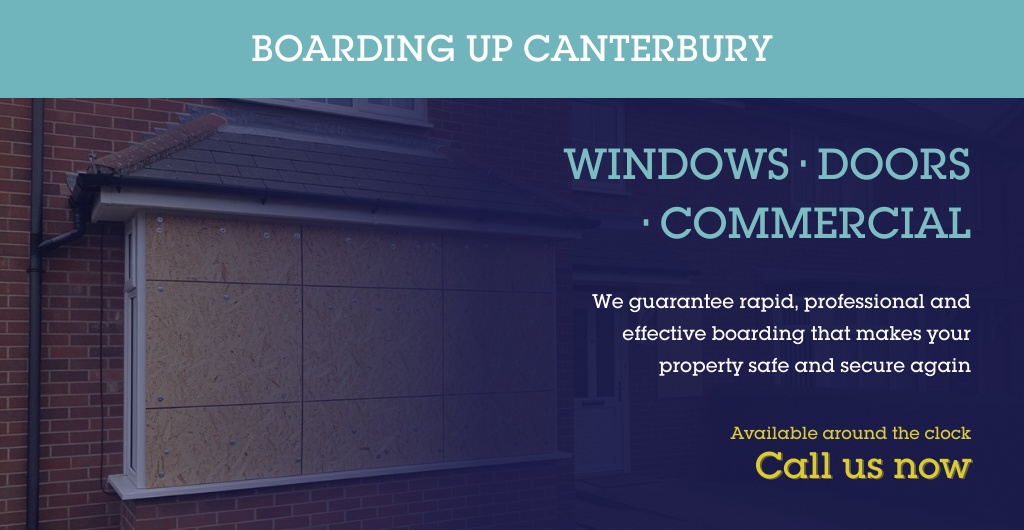
FAQs — Boarding Up in Canterbury (CT) | Quick Answers & Practical Advice
When something goes wrong—burglary damage, a smashed window, storm impact—most people have the same questions: Who do I call? What happens next? What will it cost? Will my insurer pay? This page answers the most common queries we hear from customers across Canterbury and the wider CT postcode area.
If you need urgent help right now, go straight to our emergency boarding up page or call us on 01227 953 460. If it’s not urgent, you can also email us.
The questions we’re asked most often
Do you offer emergency boarding up in Canterbury 24/7?
Yes. We provide 24/7 boarding up across Canterbury and CT postcodes, including out of hours call-outs for break-ins, vandalism, storm damage and accidents.
We don’t promise fixed arrival times because traffic, weather, access and existing emergencies affect how quickly we can attend. When you call, we’ll ask a few practical questions (what’s damaged, whether the property is safe to approach, whether police are attending) and then give you a realistic ETA on the phone.
If you need immediate assistance, use our 24-hour emergency boarding up in Canterbury page.
What should I do first if I’ve had a break-in or attempted burglary?
If you suspect the intruder may still be nearby, or you feel unsafe, call 999. If it’s safe:
- Don’t touch anything you don’t have to—there may be fingerprints.
- Take photos of the damage from a safe distance (helpful for your insurer).
- Get your police reference number (even if it’s an online report later).
- Call us to secure the property and prevent further entry.
For more guidance on what happens next, see our burglary repairs and boarding up page.
Can you board up a broken window the same day?
Often, yes—especially for urgent situations like a smashed window, exposed ground-floor openings, or when the property will be empty overnight. We prioritise emergency calls and aim to attend as quickly as possible.
When we arrive, we’ll assess the opening and choose the most appropriate method—usually 18mm exterior-grade plywood for larger or higher-risk openings, or OSB for smaller/low-risk areas where suitable. The aim is to make safe quickly while providing secure, tidy fixings.
If your issue is specifically windows, read more about window boarding in Canterbury.
What’s the difference between plywood boarding and OSB?
Both materials are used to secure openings, but they behave differently:
- Plywood (often 18mm exterior-grade): Stronger, more stable, better for larger openings and higher security needs.
- OSB (commonly 12mm for smaller openings): Cost-effective and practical for certain temporary boarding applications.
We’ll recommend what’s appropriate for the risk level, opening size, and how long it needs to stay in place. If you have insurer requirements (some specify thickness or fixing style), tell us when you call.
How do you fix boards without causing more damage?
We aim for secure, sensible fixing that matches the situation. The method depends on the frame condition and the surface we’re fixing into.
Common approaches include:
- Fixing into solid timber frames where safe and appropriate
- Using anti-tamper fixings to reduce the risk of removal from outside
- Using methods designed to spread load and avoid splitting fragile frames
If the surrounding frame is already severely damaged, we’ll explain your options before proceeding. In some cases, the priority is simply to secure the property and prevent weather ingress until repairs can be arranged.
Can you board up doors as well as windows?
Yes—doors, back doors, side entrances, and other access points. If a door has been forced and won’t lock, boarding up can prevent repeat entry (which is common after a break-in).
Depending on the situation, we may recommend:
- Door boarding up as a short-term solution
- A temporary steel door for better medium-term security, especially for vacant properties or repeated targeting
See our door boarding in Canterbury page for details.
Do you board up shopfronts and commercial glazing?
Yes. Shopfront damage is a major security risk because it’s visible and often targeted again, especially overnight. We can shopfront boarded up openings to help protect stock and reduce liability risks for the business.
Commercial jobs often involve:
- Larger boards and stronger fixing patterns
- Consideration for public safety (sharp glass, pedestrian areas)
- Documentation suitable for insurers and facilities teams
Learn more about shopfront boarding.
Can you board up a rooflight, skylight, or roof opening?
Yes—where safe access is possible. Roof and skylight issues are time-sensitive because water ingress can cause rapid internal damage.
We can secure:
- Damaged skylights/rooflights
- Open roof sections after impact
- Vulnerable openings after storm damage
Roof work may require extra access planning, and in poor conditions we may advise a safer temporary approach. Read more about roof boarding.
What does “make safe” mean?
“Make safe” usually means taking immediate steps to remove danger and reduce risk. In boarding-up terms, this often includes:
- Securing broken openings to prevent entry
- Reducing hazards from loose glass where possible (without acting as full glaziers)
- Providing a temporary barrier that protects against weather and intrusion
If additional work is required (e.g., structural repairs, glazing replacement), we’ll tell you clearly so you can arrange the right trades.
Do you provide documentation for insurance claims?
Yes. We’re not loss adjusters, but we provide the paperwork insurers typically ask for, such as:
- Itemised invoices
- Clear work descriptions (what was secured and how)
- Time-stamped photos when appropriate/available
- Notes on access issues or pre-existing damage where relevant
For practical help with the process, see insurance claims support.
Is boarding up covered by insurance?
Often, emergency measures to prevent further damage or theft can be covered—particularly after burglary, vandalism, storms, or impact. Coverage depends on your policy terms and excess.
Helpful tips:
- Report the incident promptly and keep the reference number
- Take photos before work starts (if safe)
- Keep receipts/invoices
- Ask your insurer whether they prefer a certain method or material thickness
Our insurance claims page explains how we support customers and what documentation we can provide.
How much does boarding up cost in Canterbury?
Costs vary, so we don’t publish fixed prices. The total depends on factors such as:
- Size and number of openings
- Height/access (ground floor vs upper floors)
- Material choice (plywood vs OSB, security requirements)
- Condition of frames and surrounding structure
- Whether it’s out of hours and how complex the job is
We’ll ask a few questions on the phone and give you a clear explanation of what’s involved. For a breakdown of cost factors, visit pricing.
How long does boarding up take?
A straightforward board up broken window job can often be completed quickly once access is clear, but timing depends on:
- Number of windows/doors
- Damage level (twisted frames take longer)
- Whether glass is still loose and needs careful handling
- Access constraints (shared entrances, rear access, height)
We’ll work efficiently, but we won’t rush anything that could compromise safety or security.
Will boarding up stop draughts and rain completely?
Boarding up significantly reduces exposure, but it’s not the same as a sealed, glazed unit. We aim to:
- Cover the opening fully
- Fix boards securely to reduce gaps
- Help protect the inside from weather
If the surrounding structure is uneven or damaged, some draughts may remain. If weatherproofing is a priority, tell us when you call so we can plan the best approach.
Can you help if my property is vacant or between tenants?
Yes. Vacant properties are higher risk because issues can go unnoticed and targeted entry is more likely.
Depending on how long the property will be empty, we may recommend:
- Stronger boarding and anti-tamper fixings
- A temporary steel door for compromised entrances
- Longer-term security options such as screens (where appropriate)
If you manage empty properties, our vacant property boarding up page explains common approaches.
Are your technicians insured and DBS-checked?
Yes. We’re fully insured, and our technicians are DBS-checked. We’ve been trading for 10+ years, and we take professionalism seriously—especially when working at homes, shops, and sensitive sites.
If you’d like broader background on what boarding up involves and when it’s used, see what is boarding up?.
Do you remove the boards later?
We can advise on next steps and, depending on your repair plan, discuss removal. Often, boards stay in place until glazing/door repairs are booked in and materials are ready.
If you’re coordinating repairs with insurers, landlords, or facilities management, we can provide documentation to help keep the process moving.
Can you board up from the outside only (if I’m not able to let you in)?
Sometimes, yes—if the opening is accessible and it’s safe to work externally. However, some situations require internal access for safe and secure fixing, particularly with larger windows, awkward reveals, or when the frame is unstable.
When you call, tell us:
- Whether you have keys/access
- If the property is occupied
- Whether there are hazards (loose glass, alarms, pets inside)
Do you cover areas outside Canterbury?
Yes. We cover CT postcode areas (CT1–CT50), including coastal towns and surrounding villages. If you’re not sure whether you’re in our area, check our areas we cover page or call and we’ll confirm.
You can also view local pages such as:
- boarding up in Canterbury (CT1)
- boarding up in Sturry (CT2)
- boarding up in Whitstable (CT5)
- boarding up in Herne Bay (CT6)
What information should I have ready when I call?
It helps if you can share:
- The postcode (CT area) and whether it’s a flat, house, or shop
- What’s damaged (window, door, shopfront, rooflight)
- Whether it’s a smashed window / forced entry / storm impact
- Any immediate hazards (loose glass, exposed wiring, structural movement)
- Whether police or fire services are attending
- Whether the property will be unattended overnight
If you have photos, we may ask you to send them after the call (only if it’s safe and you’re comfortable).
Still have questions? We’ll talk you through it.
If you’re unsure what you need, that’s completely normal—most people only deal with boarding up when something has gone wrong. We’ll ask a few calm, practical questions and explain the options in plain English.
Ready to get started? Call 01227 953 460 or email us for a free, no-obligation quote.
