


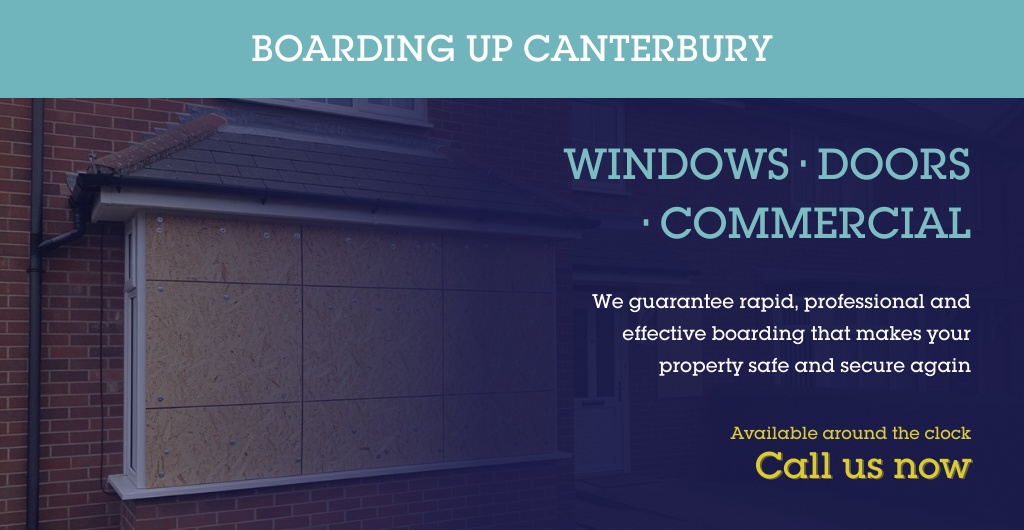
Insurance Claims Support for Boarding Up in Canterbury (CT)
If you’ve had a break-in, vandalism, storm damage or an accident at your property, dealing with the insurer can feel like a second emergency. Your priority is to secure the property and stop further damage — but you also need the right paperwork and photos so your claim doesn’t stall.
Boarding Up Canterbury provides emergency boarding up and planned securing work across the CT postcodes (CT1–CT50). We’re fully insured, have DBS-checked technicians, and we’ve been trading for 10+ years. We’re not loss adjusters and we can’t promise what an insurer will or won’t cover — but we can supply the documentation insurers typically ask for and carry out clear, itemised “make safe” work.
If you need urgent help, go straight to our emergency boarding up page or call 01227 953 460.
Do insurers cover boarding up?
Often, yes — boarding up is commonly treated as a “make safe” or “emergency temporary repairs” cost, especially after events like burglary, criminal damage, storm impact, or accidental breakage. But coverage depends on:
- Your policy wording and excess
- Whether the incident is covered (e.g., forced entry vs. wear and tear)
- Whether the work is reasonable and necessary to prevent further loss
- Any requirements to use approved contractors (varies by insurer)
The safest approach is to contact your insurer as early as you can, explain that the property needs to be secured, and ask what they require for the claim (photos, police reference, invoices, work description).
If you’re unsure what you need in the moment, call us — we’ll talk you through what we can provide and what information to collect before we arrive, if it’s safe.
When to call us vs when to call your insurer
You don’t always have time to wait on hold while a window is open to the street. In practice, many people do both.
Call the police first (when appropriate)
- If a crime is in progress or you believe someone may still be on site
- If you’ve had a break-in or vandalism and need a crime reference number
After the police have attended (or you’ve been advised it’s safe), the next step is to board up broken windows or board up a door so the property isn’t left exposed overnight.
Call your insurer early (but don’t delay making safe)
If it’s safe to do so, take photos and contact your insurer. If you can’t reach them quickly, securing the property is still the priority — insurers generally expect you to prevent further damage.
Call us to make safe and secure
We can attend for emergency boarding up (including out of hours) and carry out temporary boarding that protects the building and reduces the risk of repeat entry.
Related incident guidance:
- burglary repairs and boarding up
- vandalism repair and securing
- storm damage boarding
- accident damage securing
- fire damage securing (security only; not smoke/odour remediation)
What we provide for insurance claims (documentation & evidence)
Insurers and managing agents typically want proof of what was damaged, what was done, and why it was necessary. When we board up in Canterbury and across the CT area, we can provide:
- Itemised invoice showing labour, materials, and any additional security measures
- Clear work description / make-safe statement (what was insecure and how it was secured)
- Time-stamped photos (before, during, and after — where safe and practical)
- Notes on access and hazards (e.g., unsafe glass, damaged frames, overhead risks)
- A record of fixings/materials used, helpful if a surveyor asks what’s been installed
If the opening is too unstable for non-destructive methods (for example, the frame has split or brickwork is loose), we’ll explain the options before proceeding and document what we found.
How our boarding-up work supports a smoother claim
Good temporary security is about more than covering a hole. Done properly, it can reduce follow-on losses and reduce disputes about “reasonable steps” taken.
1) We secure the opening using appropriate materials
For most domestic and commercial openings, we typically use:
- 18mm exterior-grade plywood for strong, weather-resistant protection
- 12mm OSB for smaller or lower-risk openings where appropriate
We size boards to suit the opening and the surrounding structure, aiming for a secure fit that resists removal.
If you want to understand the methods in more detail, see:
2) We use fixings that deter tampering
Where the property is likely to be unattended, we’ll often recommend anti-tamper fixings. The point is simple: if someone can remove the board from outside with basic tools, it isn’t doing its job.
3) We help prevent repeat incidents and weather ingress
A smashed window isn’t just a security risk — it’s a weather risk. Wind-driven rain can ruin flooring, electrics, plasterwork and stock. Fast, well-fitted boarding helps limit the knock-on damage that can complicate an insurance claim.
Step-by-step: what happens when you call us after damage
When you’re stressed, clarity helps. Here’s what to expect.
-
We ask what’s happened and what’s currently unsafe
Broken glass, forced entry, shopfront damage, door hanging off, roof opening — tell us what you can. -
We confirm the address and the postcode (CT1–CT50)
We cover Canterbury and the wider CT area. We prioritise urgent calls and will give you a realistic ETA on the phone (we don’t promise fixed arrival times). -
We advise what to do while you wait
Simple safety steps: keep people away from glass, don’t touch damaged electrics, and don’t try to cover openings from ladders in bad weather. -
We attend, assess, and agree the approach
We’ll look at the frame condition, access, and any hazards. If extra work is needed due to structural damage, we explain it before starting. -
We secure the property and provide photos and paperwork
You’ll receive documentation suitable for most insurance and landlord/agent processes.
If you need urgent help tonight, use our 24/7 boarding up emergency page for fast action.
What you can do now to protect your claim (practical checklist)
If it’s safe to do so, these steps often make the insurance process easier:
- Take photos/video of damage before anything is moved (especially glass patterns, tool marks, forced locks)
- Get a police reference number for burglary/vandalism (keep it somewhere safe)
- Make a brief list of what’s damaged or missing (especially for commercial stock)
- Prevent further damage: move valuables away from exposed openings if safe
- Keep receipts/invoices for all emergency costs (including boarding up)
- Don’t discard broken locks/handles until your insurer confirms they don’t need to inspect them
If you’re a landlord or managing agent, it can also help to note:
- Tenant contact details and access arrangements
- Any existing maintenance issues (so you can separate them from the incident)
Common insurance scenarios we attend in Canterbury & the CT area
People rarely search for “insurance claims support” until something has happened. These are typical triggers for emergency boarding work:
- Post-burglary: forced doors, broken panes, damaged frames needing immediate security
- Vandalism: smashed glazing, repeated attacks, graffiti-related breakages
- Storm damage: debris impact, blown-in panes, roof openings needing weatherproofing
- Accident/impact: vehicle strikes to walls or shopfronts, shattered glass panels
- Fire damage: once the fire service has finished, buildings often need securing (we secure only — not clean-up or remediation)
If your property will be empty for a while, we may recommend stronger medium-term options like steel security screens or a temporary steel door. (We’ll explain what’s appropriate based on risk and access.)
FAQs — insurance claims & boarding up in Canterbury
Will you work with my insurer directly?
We can supply invoices, photos and a clear work statement that insurers typically accept. Some insurers prefer to speak with the policyholder rather than the contractor, but if you need us to confirm what was done, we can help with accurate documentation.
Can you send time-stamped photos for my claim?
Yes, where practical and safe. We typically take photos before and after the job so you can show the insurer the condition of the opening and that the property was secured.
Do I need to get my insurer’s approval before you board up?
Not always. If the property is insecure, you’re generally expected to prevent further damage. If you can contact your insurer quickly, do so — but don’t leave a door or window open to the elements or opportunistic entry while waiting.
What if the door frame or window frame is too damaged to board normally?
If the surrounding structure is unstable (split timber, loose masonry, severe distortion), standard fixings may not be suitable. We’ll explain options and any limitations before proceeding, and we’ll document what we find.
Can you board up a shopfront in Canterbury out of hours?
Yes — we handle shopfront boarded up call-outs, including out of hours, across Canterbury and the CT postcodes. We’ll prioritise urgent situations and give you a realistic ETA when you call.
I’m in CT1/CT2 — can you attend quickly?
We cover CT1 and CT2 as part of our Canterbury service area and prioritise urgent calls. Traffic, weather and current workload affect attendance, so we won’t guarantee fixed arrival times — but we will tell you the most realistic ETA we can on the phone.
Will the invoice show “make safe” / “temporary boarding”?
We describe the work clearly (for example: temporary boarding installed to secure property after a smashed window or forced entry). That clarity often helps when an insurer reviews the claim.
Do you offer quotes for planned security (not an emergency)?
Yes. If you’re securing a vacant building, repeated problem area, or a property between tenants, contact us for a planned solution. You may also find our pricing page helpful for understanding what affects cost (we don’t publish fixed prices because every opening is different).
Ready to proceed?
If you need to make safe a property after damage, we can help across Canterbury and the CT postcodes.
Need help now? Call 01227 953 460 for immediate assistance.
Prefer email? Contact us at info@boarding-up-canterbury.co.uk.
