


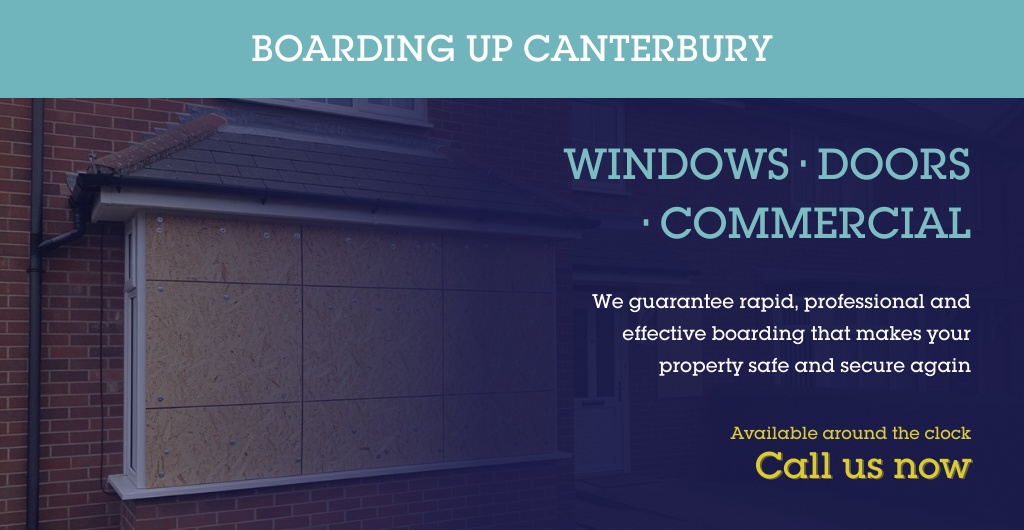
What Is Boarding Up? A Clear Guide for Canterbury & the CT Postcodes
Boarding up is the process of securing damaged, broken, or vulnerable openings in a property—most commonly windows, doors, shopfront glazing, and rooflights—using strong sheet materials or purpose-built security systems. The aim is simple: make the building safe, weather-resistant, and harder to break into until permanent repairs can be completed.
If you’re in Canterbury or anywhere across the CT postcodes and you’re dealing with a smashed window, a forced door, or storm damage, boarding up is often the fastest way to secure property and reduce further loss. For urgent help at any time, see our dedicated page for emergency boarding up or call 01227 953 460.
When Is Boarding Up Needed?
People usually look for boarding up after something stressful has happened. In our experience, the most common triggers across Canterbury and the wider CT area include:
- A smashed window after an attempted burglary or vandalism
- A door that’s been kicked in or cannot be locked
- Shopfront glass broken (even a small hole can lead to repeated attempts overnight)
- Storm damage, where glass or frames have failed and rain/wind are getting in
- Fire damage, where the property is left exposed once the emergency services have finished
- An accident/impact, such as a vehicle strike into a window, wall, or entrance
Boarding up isn’t just about stopping people getting in. It also helps prevent water ingress, reduces drafts, and makes a hazardous opening safer—especially where glass has shattered and there’s a risk to residents, customers, or passers-by.
If your situation is event-related, you may find these guides useful: burglary repairs and boarding up, vandalism repair and boarding, or storm damage boarding up.
What “Boarding Up” Actually Means (And What It Doesn’t)
A lot of people assume boarding up is the same as “repairing the window/door.” It’s not—it’s a temporary security and safety measure.
Boarding up usually includes:
- Measuring and cutting boards/screens to suit the opening
- Fixing them securely with appropriate fixings
- Making the area safe by controlling sharp edges and unstable fragments (where possible and safe)
- Weatherproofing as far as reasonably possible for a temporary solution
- Providing documentation (photos and an invoice/work statement) to help with insurance
Boarding up does not usually include:
- Supplying and fitting new glazing units or frames (that’s a separate trade)
- Structural rebuilding after major impact damage
- Full fire restoration or smoke/odour remediation (we can secure the property after a fire)
If the frame is too damaged for non-destructive fixing methods, we’ll talk you through options before proceeding. The priority is to secure the opening safely and transparently—no surprises.
How Boarding Up Works: Step-by-Step (What to Expect)
When you contact Boarding Up Canterbury, we keep the process straightforward—especially important when you’re dealing with an emergency.
-
Quick details over the phone
We’ll ask what’s happened (break-in, storm, impact), what’s damaged (window, door, shopfront, rooflight), and whether the property is currently occupied. -
We give you a realistic ETA
We don’t promise fixed arrival times—traffic, weather, and current emergencies affect attendance—but we do prioritise urgent calls and tell you what’s realistic when you ring. -
On-site assessment and “make safe” approach
We check the opening, surrounding frame condition, and safest fixing method. If there are risks (loose glass, overhead hazards), we’ll manage the work accordingly. -
Boarding or security system installation
We cut and fit the boarding/screen/temporary door to suit the opening and the risk level (e.g., ground-floor street-facing windows typically need stronger anti-tamper measures). -
Documentation for your records/insurer
We can provide time-stamped photos and an itemised invoice/work summary—often helpful for claims. More on this here: insurance claims support.
Materials & Methods: Plywood, OSB, Temporary Steel Doors and Security Screens
There isn’t one “best” type of boarding up—it depends on the opening, the location, and how long you need it secured for. We’ll recommend the most sensible option on-site.
Exterior-grade plywood (common for windows and shopfronts)
Plywood is a strong, reliable option for many emergency call-outs.
- Often used in 18mm exterior-grade sheets for larger or higher-risk openings
- Good impact resistance
- Can be fixed with anti-tamper methods to prevent removal from outside (important for unattended properties)
This is a typical choice when someone needs to board up broken window after a burglary or when a smashed window is street-facing.
Related service: window boarding in Canterbury and shopfront boarding.
OSB (Oriented Strand Board) for certain temporary works
OSB can be suitable for some smaller openings or lower-risk situations.
- Commonly seen in 12mm for smaller windows
- Cost-effective and quick to deploy
- Not always the best choice where security risk is high or where exposure to weather is severe
We’ll advise honestly—sometimes spending a little more on a stronger solution reduces the chance of repeat damage.
Door boarding vs a temporary steel door (big difference)
If the door itself is compromised, simply boarding the opening may be a short-term fix. For many break-ins, a temporary steel door provides better medium-term security and usable access.
- Stronger deterrent than timber boarding
- Allows controlled access for occupants, landlords, or trades
- Particularly useful if the property will be vacant between repair visits
Related service: door boarding up.
Security screens for longer-term vacant property protection
For unoccupied buildings—especially where repeat attempts are likely—steel security screens are often a better option than timber alone.
- Harder to remove
- Better suited for longer void periods
- Helps protect multiple openings without constant re-boarding
If you’re managing an empty building, see boarding up for vacant properties.
Rooflights and skylights (special access considerations)
Roof openings are vulnerable after storms or impact, and they can let in a surprising amount of water very quickly. Roof boarding often involves different fixings, safer access planning, and weatherproofing considerations.
Related service: roof boarding.
Is Boarding Up About Security, Safety, or Weatherproofing?
It’s usually all three—but the balance changes depending on what’s happened.
- Security first after a break-in, attempted theft, or vandalism
- Safety first where shattered glass or unstable frames pose a risk
- Weatherproofing first after storm damage, especially overnight or during heavy rain
A good boarding job considers the environment too. A ground-floor window facing a public area in Canterbury, or an exposed corner property out in the CT districts, often needs a more robust approach than a sheltered rear window.
How Long Does Boarding Up Last?
“Temporary boarding” can mean different things:
- Overnight to a few days: common after a smashed window, while glaziers source materials
- A few weeks: when frames need joinery work or there’s an insurance inspection delay
- Longer-term: for vacant properties or sites awaiting redevelopment (a screen/steel door solution is usually more appropriate than basic timber)
If you tell us your likely timeframe, we can advise the most practical setup so you’re not paying twice to redo the same opening.
Do I Need Boarding Up for Insurance Purposes?
Often, yes—insurers typically expect you to take reasonable steps to prevent further damage or theft after an incident. Boarding up is a common way to show you acted quickly to protect the property.
What helps your claim:
- A police reference number (if burglary/vandalism is involved)
- Photos of damage (only if safe to take them)
- Any emergency reports from other parties (where applicable)
- A clear invoice and description of work completed
We’re not loss adjusters and can’t approve claims, but we do provide documentation insurers typically ask for. See: insurance claims support.
What You’ll Receive After We Secure the Property
Different situations need different paperwork, but most customers want clear evidence of what was done and why. We can provide:
- A written summary of the make safe works completed
- Time-stamped photos on request (useful if you’re not on-site or managing multiple properties)
- An itemised invoice suitable for landlords, businesses, and many insurers
- Practical advice on next steps (glazier/joiner follow-on, access arrangements, or upgrading security)
If you’re arranging works on behalf of a business, see commercial property boarding up. For homes and rentals, residential boarding up may be helpful.
Common Questions About Boarding Up in Canterbury & CT Areas
Do you offer 24/7 boarding up in Canterbury?
Yes—we provide 24/7 boarding up for Canterbury and the CT postcodes. We prioritise urgent calls, but we don’t guarantee fixed arrival times. If you call, we’ll give you a realistic ETA based on current workload and travel conditions. For urgent help, use 24 hour emergency boarding up in Canterbury.
Can you board up a broken window tonight?
In many cases, yes. If you’ve got a smashed window or need to board up broken window out of hours, call 01227 953 460 and we’ll advise the best immediate option.
What’s the difference between boarding up a door and fitting a temporary steel door?
Boarding a door opening closes it off, but it doesn’t give you normal entry/exit. A temporary steel door is designed to secure the opening while still allowing access with controlled locking—often the better choice after forced entry or when repairs will take time. See door boarding up.
Can you board up a shopfront without disrupting the whole frontage?
Often, yes. Shopfronts vary widely, but we aim to secure the damaged section and reduce vulnerability to repeat attacks. If you need a shopfront boarded up after vandalism or impact, we’ll talk through the practical options on-site. Learn more: shopfront boarding.
Is boarding up noisy or messy?
It can involve drilling and fixings, and if there’s broken glass it may be messy. We work carefully and keep disruption proportionate to the situation. If the area is unsafe (for example, unstable glass overhead), we’ll prioritise safety and explain what can and can’t be done immediately.
Will boarding up damage my window frames or brickwork?
We aim to use secure methods that are appropriate for the substrate and the urgency of the job. Where non-destructive fixing is possible, we’ll use it. If the frame is already badly damaged, we may need a different approach to make the property safe—we’ll explain this before proceeding.
Do you cover my postcode outside Canterbury?
Yes—we cover CT postcodes across the region. You can also check local pages such as boarding up Canterbury CT1, boarding up Sturry CT2, and boarding up Whitstable CT5.
Need Boarding Up in Canterbury or the CT Postcodes?
If you need to secure property after a break-in, accident, or storm—or you simply want professional advice on the best temporary protection—get in touch.
Ready to get started? Call 01227 953 460 or email us for a free, no-obligation quote.
